
The Unspent Energy at the Bottom of the Page
Good copy is an engine—make sure you give it a direction to point its energy.


No matter what kind of copywriting you do—landing pages, emails, direct response, social media, editorial, etc—eventually, you’re going to reach the end of it. The copy, I mean. Not all of copywriting. Someday you may actually reach the end of “copywriting,” and if you do, please write to let us all know how it looks from that side.
Gotcha! Now you’re writing again.
“You can check out any time you like…”
In this article, however, I’m talking about the ending of the copy itself, and what so many new copywriters forget about it: putting it there in the first place.
There are plenty of podcasts, blog posts, and videos about high-conversion copy, but they don’t address the most important part of conversions: the actual conversion. They go on and on about how to create copy that converts, but spend little time talking about the actual converting copy, leading to uncountable reams of sales pages that go on and on (often descending into hell itself) before ending like a college essay thrown together at 3am: because it has to.
This is a massive waste of the energy you have just spent an entire landing page building up! If someone actually makes it to the bottom of your page, then they are, by definition, a person who is invested in your topic and has energy to spend on it.
Give them a way to spend it!
Set up your argument
Many people default to the Descending Copy Ladder to Hell when they write for reasons I already discussed here, and a big one is a lack of awareness about messaging frameworks. It sounds complicated, but it’s just the skeleton of your piece. If your skeleton is strong, then you’ll be easily able to hang the meat-copy up on it later.
Have you ever seen a body without a skeleton? It’s just a pile of meat on the floor. No one likes a pile of meat on the floor.
A good framework is topic-agnostic, because it has nothing to do with the topic itself. Messaging frameworks are entirely about how you communicate your message to your audience, regardless of the topic of your message, and how you build up energy you will later convert into action.
Here’s a simple one I almost always default to:
- State the problem
- Create urgency
- Offer a solution
State the problem
Your readership may or may not already be aware of the problem you want to offer a solution to. If they’re not aware, then you’re making them aware. If they already are, then you’re telling them they’re about to learn how to solve it.
A lot of copy I’m asked to critique gets this wrong in one of two ways: either they don’t state the problem they’re offering a solution to until they’re 75% of the way through the piece, or they spend the first 75% of the piece stating the problem. State the problem early and briefly, follow up with an emotional truth or supporting evidence to show you’re not making it up, and move on.
Create urgency
Your reader knows there’s a problem now—great! Why should they care? Show them why this problem is something they need a solution for now. If you do this part well, they’ll be convinced they need a solution even if they don’t go with your solution.*
Copy that drones on about the problem and belabors the point fails to make it urgent. The reader wants to be led, but they want to know they’re being led to something. Raising the stakes shows them that where they are now in your argument is different from where they were before. It gives them direction. Show them why they’ll be unhappy if they don’t take action now, and move onto the solution you want them to choose.
Offer a solution
Dear Reader understands the problem and why it requires immediate action. You’ve alley-ed, now it’s time for that sweet, sweet -oop. Give them the solution you’ve got them begging for. If you’ve done the previous two parts right, they might even already know what that solution is.
Most of the copy I see in critique requests actually does this! They could certainly do it with fewer words (which, to be fair, is universally and eternally true across all levels of skill and experience), but the solution is always presented, and sometimes even with a few supporting Reasons To Buy/Believe (RTBs). Which is great! You’ve done it! Now it’s time to bring them home with a…
…where are you going? Why is the page over? How do they take advantage of the solution you’ve just sold them on??
Don’t assume anything
The messaging framework above is extraordinarily effective when executed well. It identifies the reader’s problem, tells the reader why they need to address it quickly, and offers a way to address it. Most new copywriters understand this to some degree; their issue isn’t a lack of comprehension, just execution, and that comes with practice.
New copywriters know how to build energy, but don’t always consider how to direct it. They convince the reader with their argument before disappearing once their argument is over. If you have a reader that’s made it to the bottom of the page, then you’ve successfully built up energy within them that they want to spend.
If you hadn’t, then they already would have clicked away from your page.)
Don’t assume they’ll scroll back to the top of the page to click a link up there. Don’t assume they’ll Google the name of whatever you’re pushing and take action that way. Don’t assume they’ll take the action you want them to take.
Make it extremely easy for them to take the action you want them to take.
Tell them what to do!!
This is the point of Calls To Action (CTAs): giving the reader an actionable way to spend the energy they have. Most of the time, at least online, this is a button to click with some short copy: Buy Now, Read Here, Learn More, Compare Models, Download, Subscribe, etc.
I’m not entirely surprised that this final piece of the messaging framework often gets left out. It’s more often implied than it is explicit, but the point of a messaging framework is to help the writer build energy in the reader. It doesn’t actually get them to spend that energy on its own.
“How do I get my reader to take the action I want?”
“Describe the problem, make it urgent, and present the solution.”
“OK… then what?”
The framework isn’t the answer. The actual answer is: “Tell them the action you want them to take, and give them a way to take that action immediately.” All the framework does is get your reader ready to actually take action once prompted.
You have to prompt them first. I mean that very literally: CTAs are explicit verbs.
- If your problem is “I don’t know how to get readers to click on links to my site,” then saying your site is a great thing to visit won’t do squat if you don’t literally show how to go to your site. Give them a link to click and tell them to click it:
- If your problem is “I don’t know how to get users to take advantage of our limited time offer,” explaining the offer won’t be enough. You have to give them the coupon code or special link, and tell them why they should click it:
- If your problem is “I don’t know how to get my readers to forward my newsletters to their friends,” sending great newsletters won’t do it. Give them a one-click link that opens up a new email draft with a link to the newsletter issue in it:
DYSWIDT?
And if your problem is “I need more people to subscribe to my copywriting newsletter,” writing a great, actionable newsletter issue won’t be enough. You need to provide them with a big fat SUBSCRIBE NOW button for them to actually subscribe, now:
See how much more effective that is? Seriously, though:
*Which, by the way, is still a win for you. They trust you now, even if they solve the problem another way. That can pay off later.
**Or, y’know, click the forward button in the email program you’re currently reading this in, if you’re reading this as an email.
Blots and Drops
- The framework outlined above is applicable to literally any topic that you want to inspire a new behavior or emotion about in your audience. I’m even using it in this very issue:
- The problem: writers are focusing on copy that converts and not enough on messaging
- The urgency: writers are losing readers when they don’t provide a framework
- The solution: provide some kind of CTA at the end of your messaging
- You’ll also notice I follow the solution up with a CTA of my own: a big fat SUBSCRIBE NOW button. I’m not just the president, I’m also a customer!
- I’m really eager to read this: The Independent Media Hustle - The American Prospect.
I still believe, through all the chaos of the current online world, that something new is happening. 404 Media, Flaming Hydra, Dropout, and more are actually disrupting the media industry and showing us all how else all this can work at scale. I never considered TPM to part of that group, but maybe this article will change my mind. - This is hilarious, but also the most sincere and sober analysis of the AI hype bubble I’ve read yet: I Will F*cking Piledrive You If You Mention AI Again — Ludicity
Thanks for reading. If you were forwarded this, I’m glad you’re here! Hit the subscribe button below to jump in on the Summer Spiller sale: Free Full Access all summer long, and $10/month starting in September.
Got something to say? Subscribe to sound off in the comments. Free tier gets comment access. I’ll reply! Seriously, I’ll reply!
Our first Reader Q+A issue is next week. Head on over to the Q+A submission form to drop off a Q for me to A.
Finally, feel encouraged to forward and share this. And if you want to sound off, I’m on Bluesky, LinkedIn, and Discord as @seancurry1. You can usually find me in the Garbage Day and Copywriting Collective servers.
Welcome back to the Bottom of the Page. In today's episode, we're going to break all the rules I just laid out above and leave you not with a CTA, but a Very Important Update on a previous BotP.
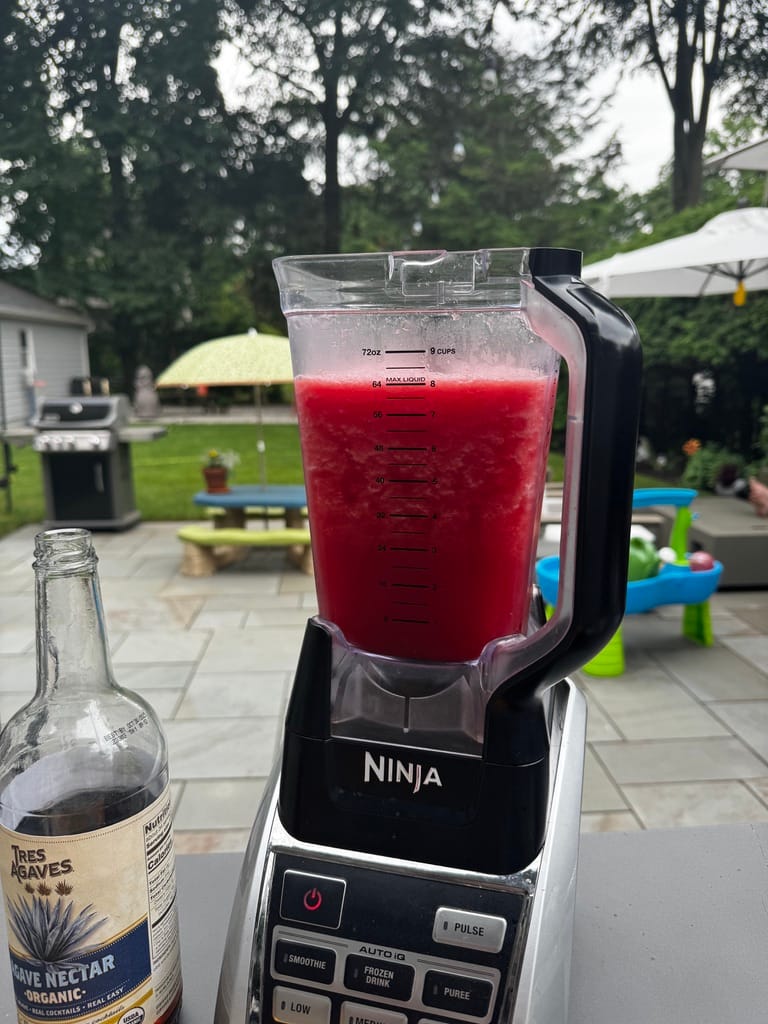
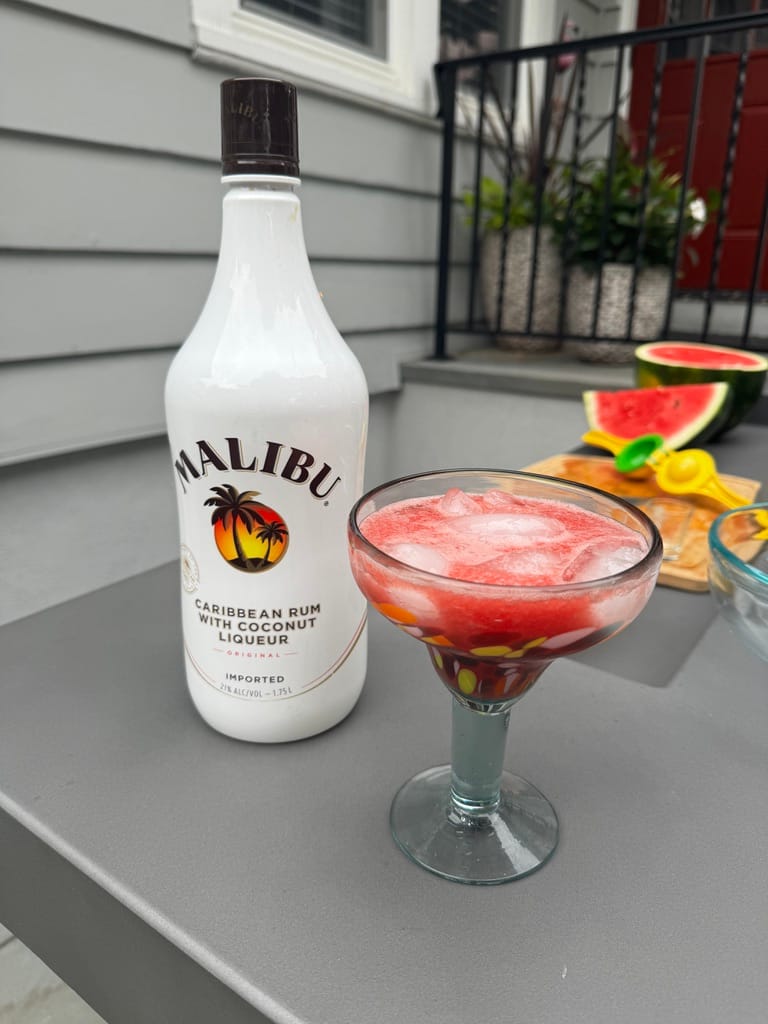
We ended up making the watermelon/lime slushies from a couple issues back. They were amazing:

Inkspiller Smoothies
Hope you're staying cool in this heat!